The Ultimate Guide to Welded Mesh: Everything You Need to Know
By Zain Corporation | March 14, 2026 | Category: Welded Mesh
This comprehensive guide is designed for contractors, facility managers, farmers, DIY enthusiasts, and anyone who needs to understand how welded mesh works and when to use it.
You'll discover the fundamental properties that make welded mesh different from other wire products and learn about the various types and specifications available in today's market. We'll also dive deep into the top applications where welded mesh truly shines and explore the key benefits that give it a major advantage over alternative materials.
By the end of this guide, you'll know exactly how to select the right welded mesh for your specific project needs and understand the professional installation techniques that ensure maximum performance and longevity.
What Makes Welded Mesh Different from Other Wire Products
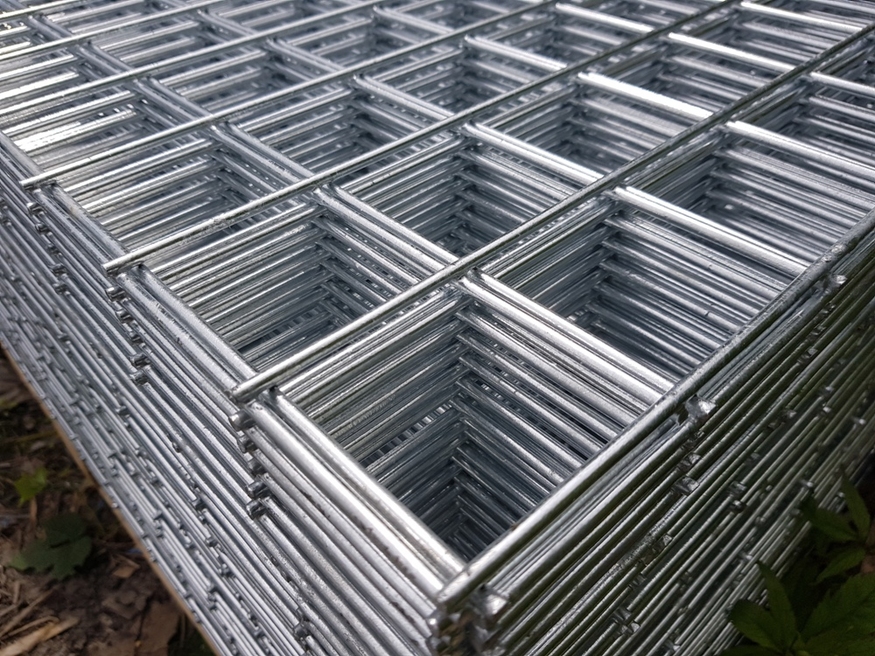
Welded mesh stands apart from traditional wire fencing and chain link products through its unique construction method. Unlike woven wire that relies on interlocking patterns or twisted connections, welded mesh features wire strands that are electrically fused together at every intersection point. This creates a rigid, stable grid structure that won't shift or distort under pressure.
The key difference lies in the junction points. Chain link fencing uses hooks and loops that can gradually loosen over time, while woven wire depends on over-and-under weaving patterns that allow movement between wires. Welded mesh eliminates these weak points by permanently bonding each wire crossing with precise heat application.
This fusion process creates several advantages over other wire products:
- Dimensional stability: The mesh maintains its exact grid pattern without sagging or distortion
- Uniform opening sizes: Each aperture remains consistent, preventing gaps that could compromise security or containment
- Enhanced load distribution: Forces spread evenly across the entire panel rather than concentrating at connection points
- Reduced maintenance: No loose connections to retighten or repair over time
The rigid structure also makes welded mesh self-supporting across larger spans compared to flexible wire products that require more frequent post spacing. This characteristic makes it particularly valuable for applications where precision and reliability are critical.
Key Manufacturing Process That Ensures Superior Strength
The welded mesh manufacturing process begins with high-quality wire rods that undergo careful preparation and quality control. The wire is first drawn to precise diameters and straightened using specialized machinery that removes any internal stresses or inconsistencies.
During the welding phase, longitudinal and transverse wires are positioned in a precise grid pattern using automated equipment. The intersection points are then subjected to controlled electrical resistance welding, where high-amperage current passes through the wire crossing for milliseconds. This creates intense localized heat that melts and fuses the wires together without affecting the surrounding material.
Critical process parameters include:
- Current intensity: Precisely calibrated to achieve full penetration welding without burning through the wire
- Welding time: Measured in milliseconds to prevent over-heating
- Electrode pressure: Applied consistently to ensure proper contact and heat transfer
- Grid positioning: Maintained within tight tolerances for uniform aperture sizes.
Quality control occurs throughout production with automated systems checking weld integrity, dimensional accuracy, and overall panel consistency. Random sampling tests verify tensile strength at weld points, often exceeding 85% of the parent wire strength.
The cooling process is equally important, allowing the welded joints to develop their full structural properties. Modern manufacturing lines incorporate controlled cooling zones that prevent rapid temperature changes that could create stress concentrations or brittle joints.
Top Applications Where Welded Mesh Excels
- Construction and Concrete Reinforcement Projects
- Security Fencing and Perimeter Protection Solutions
- Agricultural and Animal Enclosure Uses
- Industrial Filtration and Screening Applications
- Garden and Landscaping Enhancement Projects
Why Work with Zain Corporation India?
Choosing the right welded wire mesh isn’t just about strength. Zain Corporation India offers both welded wire mesh suppliers tailored to industrial and commercial needs. It’s about trust.